
 Names. Receipts. The stories they kill. Issue 004 · Friday, April 17, 2026 ◆  The gavel he never struck. The coins he kept. ✓ SOURCED: OGE Form 278e · DOJ memo · 18 U.S.C. § 208 · Campaign Legal Center · Tips: [email protected] Todd Blanche held up to $485,000 in crypto when he was confirmed Deputy Attorney General. Thirty-three days in, he issued a memo that ended the Justice Department’s dedicated crypto-enforcement posture. Bitcoin rose sharply before he finally “divested” — by gifting crypto valued up to $315,000 to his adult children. He is now Acting Attorney General. ◆ In This Issue
◆ February 11, 2025. Todd Blanche files a financial disclosure. Under assets: ten cryptocurrencies. Floor $159,000. Ceiling $485,000. March 5, 2025. The Senate confirms him as Deputy Attorney General of the United States. The ninety-day divestiture clock starts. April 7. Thirty-three days in. Sixty days before his deadline. Still holding every coin. He issues a memo titled “Ending Regulation by Prosecution.” It disbands the National Cryptocurrency Enforcement Team. He held. Bitcoin rose. Then he “divested” — by giving crypto valued between $116,000 and $315,000 to his adult children and a grandchild. Three dates. One man. No mystery about what he works for. ◆ Quote of the Day
The DOJ’s full on-the-record response to whether anyone signed off on Todd Blanche retaining his crypto holdings while issuing the memo that deregulated crypto. They will not say who cleared it. They will not say when. They will not release the memo. That sentence is designed to do one thing: make you stop asking. ◆ Number of the Day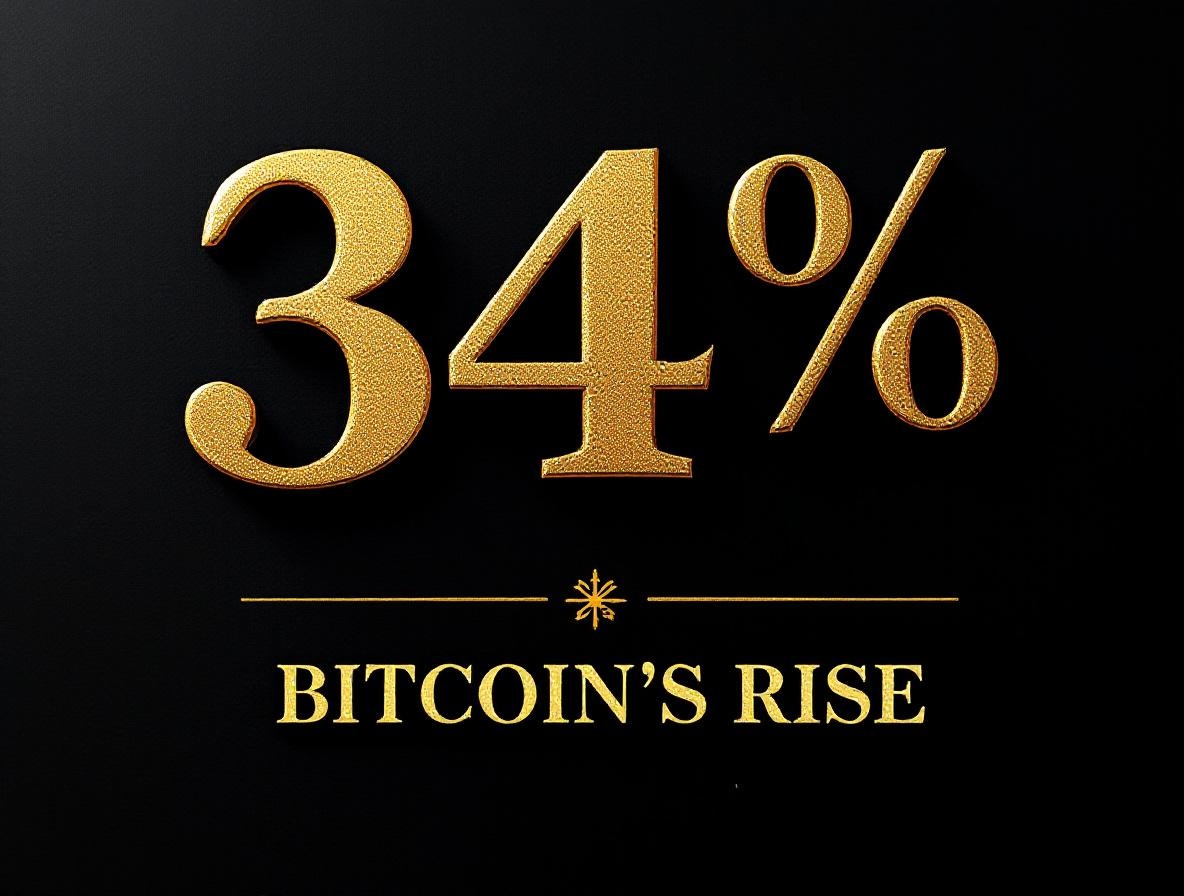 Bitcoin's rise between his memo and his divestiture Source: Coinbase / Coindesk, April 7 – June 3, 2025 · Campaign Legal Center divestiture calculation
From $79,215 on the day he issued the memo to $105,882 on the day the Campaign Legal Center calculated his divestiture price. He issued the order when prices were low. He held through the enforcement collapse. He divested at the top of the post-memo rally. That is not coincidence. That is a price chart. ◆ The MemoHere is what happened. Step by step. All of it documented. On February 11, 2025, Todd Blanche’s nominee financial disclosure — OGE Form 278e — was entered into the Office of Government Ethics record. Across the crypto section: Bitcoin, Ethereum, Solana, Cardano, Polygon, Polkadot, Basic Attention Token, and several additional tokens. Ten cryptocurrency assets in total. Aggregate value: between $159,000 and $485,000. He signed an ethics agreement. He pledged to divest within ninety days of confirmation. He pledged to recuse himself from any matter with a direct and predictable effect on his crypto holdings until he divested. On March 5, 2025, the Senate confirmed him as Deputy Attorney General. The ninety-day clock started. He had until June 3 to sell everything. On April 7 — thirty-three days in, sixty days before his deadline, still holding every single coin — he issued a memo titled “Ending Regulation by Prosecution.” The memo disbanded the National Cryptocurrency Enforcement Team. The NCET. A dedicated unit established in 2021 to investigate crypto fraud, money laundering through decentralized exchanges, and North Korean state-sponsored crypto theft. The memo ordered all ongoing investigations “inconsistent with the foregoing” closed. Not paused. Not reviewed. Closed. Former federal ethics officials told ProPublica he violated 18 U.S.C. Section 208 — the federal conflicts of interest statute. Willful violations carry up to five years in prison and a $250,000 fine. ◆ The Cases They KilledSamourai Wallet. Two co-founders charged with operating an unlicensed money transmitter and money laundering conspiracy — running a mixing service specifically designed to obscure the source of crypto transactions. After the memo, prosecutors and defense jointly requested a delay. The DOJ is now weighing dropping charges entirely. The defense cited the Blanche memo as grounds. Tornado Cash. Roman Storm. Another crypto mixer. The money transmitting charge was dropped per the memo. Treasury pulled Tornado Cash off the sanctions list entirely. A tool used by sanctions evaders to move money is back in operation, its legal exposure stripped. The one they kept: Do Kwon. Forty billion dollars in investor losses. They kept it because forty billion dollars and real people who lost their savings made it politically impossible to kill. That is not restraint. That is the exception that proves the rule. The NCET had been building those cases for years. The victims will not get justice. And illicit crypto flows continued to climb — Chainalysis’s 2025 annual report tracked $40.9 billion in illicit crypto inflows for 2024, since revised upward to $57.2 billion in its 2026 update. TRM Labs separately pegged the 2024 total at roughly $158 billion. The enforcement unit that was designed to cut into those numbers was taken off the field. ◆
◆ The LoopholeWhen Blanche finally divested, he did not sell. He gifted the crypto to his adult children and a grandchild. Per his divestiture filing, between $116,000 and $315,000 in cryptocurrency — transferred out of his name. The crypto did not leave the family. It left his disclosure form. 18 U.S.C. § 208 covers yourself. It covers your spouse. It covers your minor children. Read that list again.
It does not cover adult children. Todd Blanche found the gap. He moved the assets one generation down — but not to minors. To adults. People who hold accounts. People who can sell whenever they want. People the statute does not reach. Kedric Payne at the Campaign Legal Center: “That purpose is defeated when an official simply gives conflicted assets to adult children.” Virginia Canter — former ethics lawyer for the White House, Treasury, and the SEC — called it “an obvious conflict of interest.” No precedent found for this technique at his level of government. He did not invent a new form of compliance. He invented a new form of evasion. He found the loophole, drove six figures of crypto through it, and called it done. ◆ Burn NoticeThe people who build the enforcement architecture know exactly what it’s for. The National Cryptocurrency Enforcement Team was stood up in 2021 for a reason. Crypto fraud was not a theoretical problem. It was a working pipeline — money laundered through mixers, ransomware paid in Bitcoin, North Korean state actors draining exchanges, retail investors losing their savings to schemes that would have been illegal in any other asset class. The NCET existed because Americans were being robbed in a channel the rest of the Justice Department did not know how to close. Todd Blanche knew what the NCET was built to close. He had spent his entire career in federal criminal practice. He knew what money laundering through decentralized exchanges looks like. He knew what a sanctioned-state evasion case looks like. He knew what a fraud scheme targeting retail investors looks like. He had the memo in his hand before he signed it. He signed it anyway. And sixty days later, when the Bitcoin he had been holding had climbed 34 percent, he moved the coins into his adult children’s accounts and called the problem solved. This is what corruption looks like when the person committing it knows exactly what the law is supposed to do. It is not clumsy. It is not accidental. It is the most polished possible version of the thing — engineered by a man who built his career on the same code he is now quietly disassembling. ◆ The Chain of CommandIn early April 2026, Pam Bondi’s departure from Attorney General was announced. Todd Blanche — the man with the crypto, the memo, the loophole, and open ethics complaints — stepped in as Acting Attorney General. The complaints already on file: In January 2026, the Campaign Legal Center filed a formal complaint with the DOJ Inspector General. In February 2026, CLC expanded its filing to the Office of Government Ethics — alleging ethics-agreement violations, violations of 18 U.S.C. § 208, and false statements on compliance forms. On January 28, 2026, six Senate Democrats — Mazie Hirono (lead), Elizabeth Warren, Dick Durbin, Sheldon Whitehouse, Chris Coons, and Richard Blumenthal — sent a letter directly to Deputy Attorney General Blanche demanding answers on the NCET disbandment and the crypto conflict of interest. As of publication, the DOJ has not publicly responded to any of them. Multiple complaints. All open. All unresolved. And the man they name is running the building.
The Inspector General who would investigate him reports to him. The ethics office is within his chain of command. The prosecutors who would bring charges under 18 U.S.C. § 208 work for him. Historical Parallel: Teapot Dome, 1920s. Interior Secretary Albert Fall leased federal oil reserves to private companies, collected payments in return, went to prison. Blanche never took a dollar in cash. He just issued an order and watched the asset class he was holding rally before he moved it out of his name. The mechanism is cleaner. The result is the same. The only difference is that Fall had an adversary willing to prosecute. ◆ Closing VerdictTodd Blanche had motive. He held up to $485,000 in the asset class he was about to deregulate. He had opportunity. He was the number two at the Department of Justice. He had the pen. And he had a pattern. He signed the ethics agreement. He violated its terms. He issued the order. He held the assets through the price increase. He gifted them to his adult children. He called it compliance. In early 2025, multiple federal enforcement agencies with jurisdiction over crypto pulled back at roughly the same moment — the DOJ via the Blanche memo, the SEC via new guidance narrowing its theories, and the CFPB via reduced digital-asset activity. The administration’s signature economic policy was a national strategic Bitcoin reserve — the president signed an executive order directing the Treasury to accumulate Bitcoin. The people who held the asset were the people setting policy for the asset. That is not a revolving door. The memo is on the DOJ website. The disclosure is on OGE’s. The statute is on Congress.gov. The penalty is five years. The receipts are public. All of it was always there. The only missing piece is a prosecutor who isn’t Todd Blanche. ◆ Also This Week I wrote in The Hill about what it takes to beat this system in 2028. The argument is different. The diagnosis is the same. In 2028, the candidate who admits the system has failed everyone will win — The Hill → ◆ Next on Burn the Playbook — Monday A twenty-something financial consultant’s entire lifetime of political giving was twenty dollars to Pete Buttigieg. Then she wrote a check for three and a half million dollars to MAGA Inc. Her father, facing federal bribery charges, received a full pardon. Twenty days after another donor wrote a million-dollar check, her son’s eighteen-month prison sentence disappeared. He had stolen ten-point-nine million dollars in payroll taxes from six hundred healthcare workers. THE PRICE LIST — fifty thousand dollars a day. Monday. ◆ Sources: OGE Form 278e · DOJ Memo "Ending Regulation by Prosecution" (April 7, 2025) · 18 U.S.C. § 208 · CLC IG Complaint (January 2026) · CLC OGE Complaint (February 2026) · ProPublica · Campaign Legal Center · Senate letter (Warren, Durbin, Hirono, Whitehouse, Coons, Blumenthal, January 28, 2026) · Bitcoin price data: Coinbase/Coindesk, April–June 2025 · Chainalysis 2025 & 2026 Crypto Crime Reports · TRM Labs. Published by Burn the Playbook · Big Tree Lane Media LLC · Every dollar sourced. Every name verified. Every comfortable version killed. ◆ Burn the Playbook is also a podcast. New episode every week. Listen on Spotify → | Watch on YouTube → |
He killed the investigation. He kept the coins.
$485K in crypto. 33 days in. A memo that killed the unit that would investigate him
